
Neural decoding is shifting from labs to real life – with systems that turn brain signals into words. Mind reading technology is no longer theoretical, and as laws emerge to protect cognitive privacy, the ethical tension only deepens.
Read also:
Universal Gamification Platform from Soft2Bet
What Mind Reading Technology Can Really Do
A volunteer lies still inside an fMRI scanner. On the monitor next to them, fragments of their thoughts begin appearing as text – stuttering first, then more confidently. A dog, a house, a memory of running. What’s strange isn’t that it works. It’s that the machine seems so sure.
Technically, most current mind-reading systems rely on high-resolution neural imaging combined with AI language models. These models aren’t “reading” thoughts as such – not directly – but they can decode patterns of brain activity and match them to likely semantic outcomes. A silent internal sentence like “I’m tired of this” might emerge on-screen as “I want to stop.” It’s close enough to be useful – or dangerous.
Meta’s prototype uses non-invasive brain interfaces to reconstruct imagined speech. In 2023, their model could predict entire sentences from limited neural data, particularly when users had trained with it over time. Accuracy rates varied, but the implications were stable: intent became interpretable.
What unsettled test participants wasn’t the tech’s error rate. It was when the machine got it right – when it echoed something they’d thought but hadn’t voiced. One participant reportedly looked away from the screen mid-test, whispering “That’s not for you.”
This isn’t science fiction. It’s interaction stripped of choice.
The Rise of Cognitive Privacy Laws
In May 2024, Colorado became the first U.S. state to pass a law explicitly protecting “neural data.” It didn’t make headlines immediately – the legislative language was dense, tucked between digital privacy updates. But for tech ethicists, it was a pivot point. For the first time, a government had legally defined the right to mental privacy.
The law prohibits collection, analysis, and use of brain activity data without explicit consent. Notably, it doesn’t just cover medical records. It extends to “inferred cognition” – predictions based on neural input, even if the data doesn’t come from traditional medical devices.
Lawmakers cited growing concern over neurotech firms offering “focus-tracking” wearables in schools and workplaces. One senator described a scenario where a student’s attention lapse could be algorithmically flagged in real time. “We legislate cameras. Why not the cortex?” he asked. The silence that followed in the chamber was reportedly long.
Still, the law is a local anomaly. National and international standards remain vague. Some critics argue that mental privacy is too abstract to regulate effectively – that unless thoughts are expressed, they can’t be protected. But neural data is an expression. Just… early.
Ethical Tensions and Neuro-Rights
As the technical capacity to interpret brain activity increases, so does the risk of misuse. Ethical tensions aren’t hypothetical – they’re architectural. Who owns the outputs of neural decoding? What happens when thought becomes evidence?
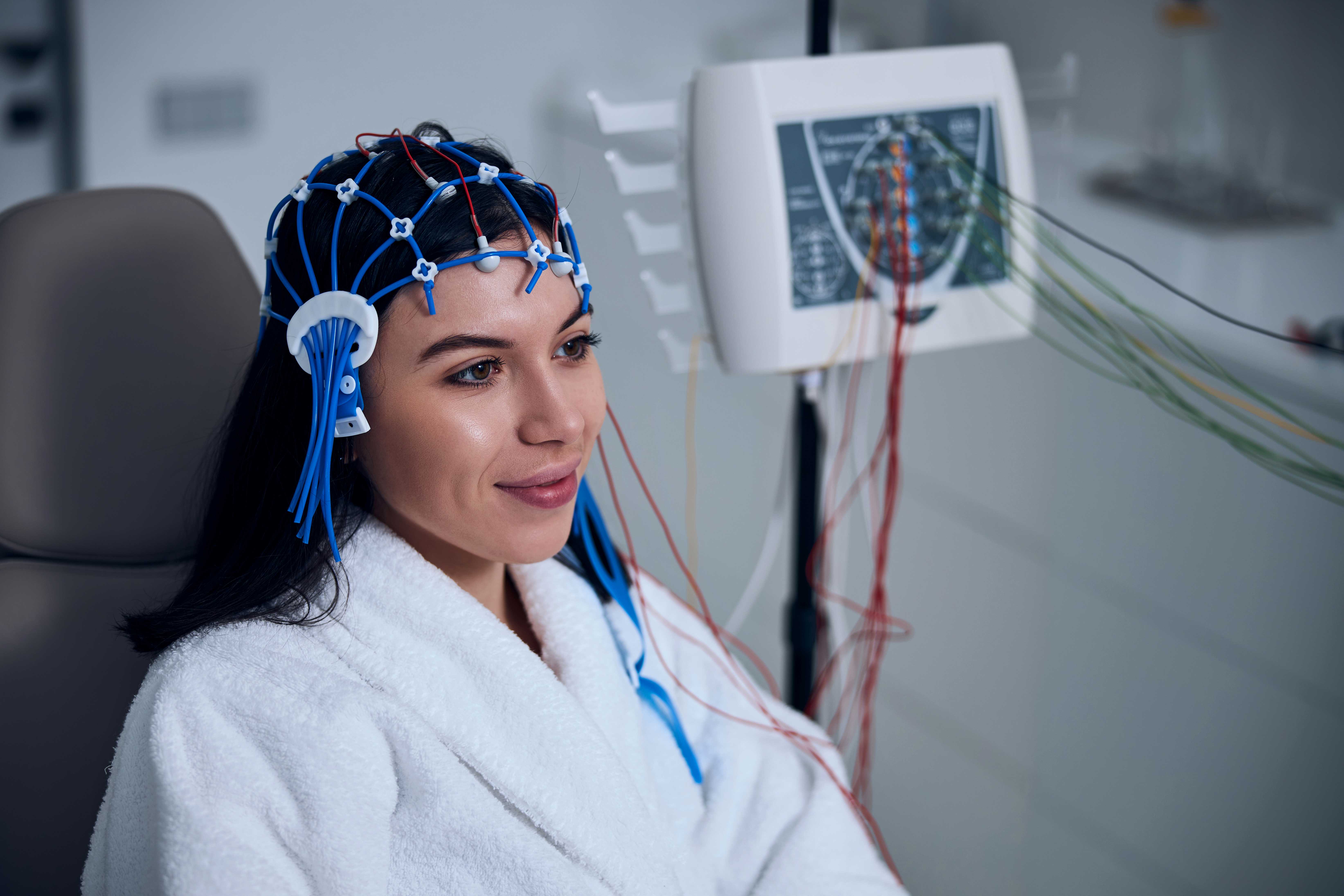 Nature’s editorial board has argued for urgent regulatory frameworks, suggesting that “neuro-rights” be considered as fundamental as freedom of speech. The core issues include:
- Consent – Is participation truly voluntary when social pressure or economic incentives are involved?
- Data security – Unlike passwords, brain signals can’t be changed.
- Mental sovereignty – If your thoughts can be interpreted, can they also be manipulated?
Researchers at Columbia University proposed a list of minimum ethical safeguards, including informed training protocols, opt-out-by-default architectures, and public oversight boards.
Yet these debates are riddled with edge cases. Suppose a neural interface detects distress in a silent person during interrogation. Is that information admissible? Actionable? Moral?
And if a company stores 30 seconds of pre-speech neural data to “optimize response,” where is the line between service and surveillance?
The questions arrive faster than the answers – and they don’t wait for consensus.
Future of Mind Interface and Policy Response
As brain-computer interfaces move from clinical to commercial, so too will the stakes. Schools, insurers, advertisers – each may find reasons to explore what a person thinks before they act.
One possible future: neural contracts. You agree to let a device interpret your intent to speed up interaction. In return, the platform claims reduced friction, greater efficiency. Another: predictive profiling based on attention shifts or emotional signals. The logic is seductively familiar – if you’re already thinking it, isn’t it fair use?
But the trust collapse will be subtle. Users may comply outwardly while shielding their thoughts inwards. One tech ethicist compared it to “internal VPNs” – cognitive masks people develop to stay safe inside their own heads.
At a policy level, frameworks are catching up slowly. Chile became the first country to constitutionally guarantee neuro-rights. The EU is drafting proposals under its digital rights umbrella. But most global tech giants remain unregulated in this space – operating under pre-cognitive law.
And maybe that’s the danger. Not that machines can listen, but that we haven’t agreed when they should.
Comments are closed